
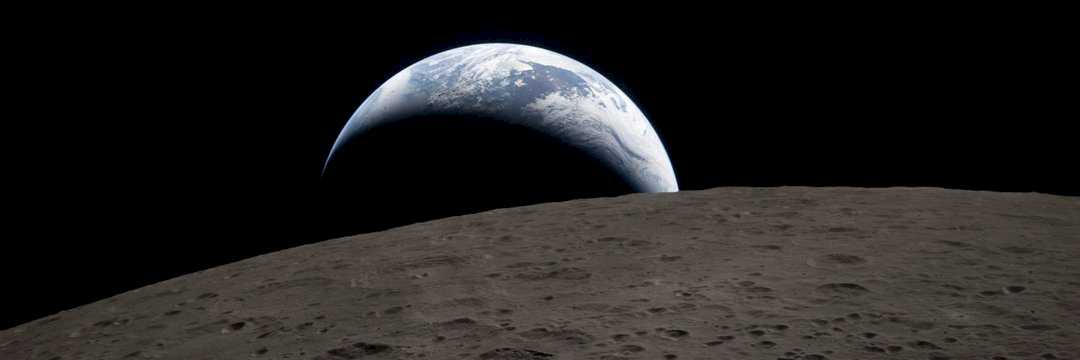
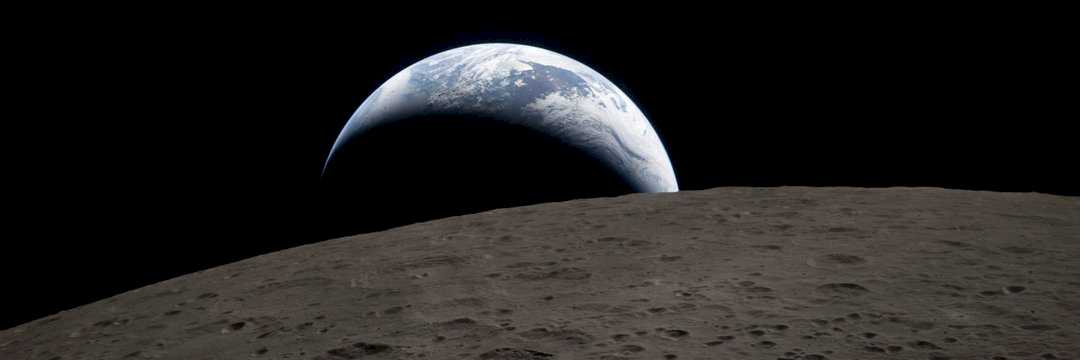


Where are we on the journey to a lunar economy?
Former NASA Administrator and LogiQ co-president Mike Griffin framed it best: “the question about the vision for space exploration boils down to whether we want to incorporate the solar system in our economic sphere or not.” To live off the land within the solar system, not depending on Earth for the necessities of life, requires in-situ resource utilization (ISRU). Some moons of Saturn and Jupiter may be candidates but, with current propulsion technologies, remain off-limit for commercial round trips. For accessible ISRU, we draw a line in the vicinity of Mars and the Main Belt asteroids. Mars is a settlement project self-funded by governments and individuals, with opportunities for privateers. At the other end of the inner solar system, excluding Mercury, Venus may be habitable in its upper atmosphere.
But it is in between that we might have a business case in the making: Greater Earth, comprising of Earth orbits, cislunar space, the moon, and near-Earth asteroids (NEAs), is the piece of real estate that enables propellant depots, with logistical and industrial opportunities. This cislunar perimeter is meant to act as an ISRU hub toward the Solar System. Public funding of lunar political commitment stems from such common sense understanding. Private sector contracts and investors are working hard to make it happen: Intuitive Machines was among the top four best performing space stocks of 2024. But is a cis/lunar economy even a thing at all, if meant as a sustainable market economy on the moon, in its vicinity, and the cislunar space that starts beyond the currently occupied Earth orbits? In a nutshell, we aren’t there yet. What follows is a pathway for what it would take to get there.
Cis/lunar commercial development: a clear and pragmatic vision
The moon is the closest planetary body on which to practice ISRU, which would allow humanity to build value chains within the greater Earth perimeter. Moving beyond Flags and Footprints missions, establishing Antarctic-style research stations, producing propellant and setting up industrial pilots would enable a market based on manufacturing and trading industrial goods and consumables, all while developing space habitats in various locations. For the industrialization of space the investment and trade in high-value goods for Earth markets is paramount: dumping unprocessed raw materials from space back on Earth makes no economic sense. Over time, mineral resources from NEAs may be integrated in these Greater Earth value chains. Cis/lunar closed systems and power generation may be used to solve terrestrial environmental issues. This does take decades. Yet, self-sustaining lunar stations may emerge post-2050, invested by international civil and commercial stakeholders with sustained political will and sustainable resources. The biggest market opportunities are cis/lunar transportation, infrastructures, habitat and ISRU, with various power generation options (such as solar and nuclear). Next come essential supporting activities such as communications, agrifood production and consumable supplies.
From speculation to validation
Potentially extractable lunar resources include volatiles such as ice water and oxygen (to be used for propellant, life support systems and radiation shields) and platinum group metals (valuable to tech markets). Helium-3 recently made a comeback with a use case as a cooling device for quantum computers, rather than for the elusive albeit increasingly invested-in nuclear fusion. A first principle of resources extraction economic realism is to go through the motions of increasing geological (or here, selenical) confidence from resources to reserves: from inferred to indicated to measured mineral resources, it is crucial to precisely quantify mineral reserves, or the techno-economically mineable part of these carefully measured resources — the ground truth. We don’t have lunar ground truth yet, so we need to explore, map, measure and extract. That’s a lot of missing data, but that is only a first step.
Next, ISRU needs to not only work but scale up at a reasonable level of industrial production for commercial exploitation. That depends on technology readiness in-situ, not with a prototype on Earth. The subsequent requirement is affordable shipping of a marketable output to a customer in space or on Earth. With capital expenditures, cis/lunar shipping, and the cost in treasure and human health, if the commercial invoice math doesn’t add up, you’ve built yourself a white elephant.



Space news on Umojja.com